What are the main advantages and disadvantages?
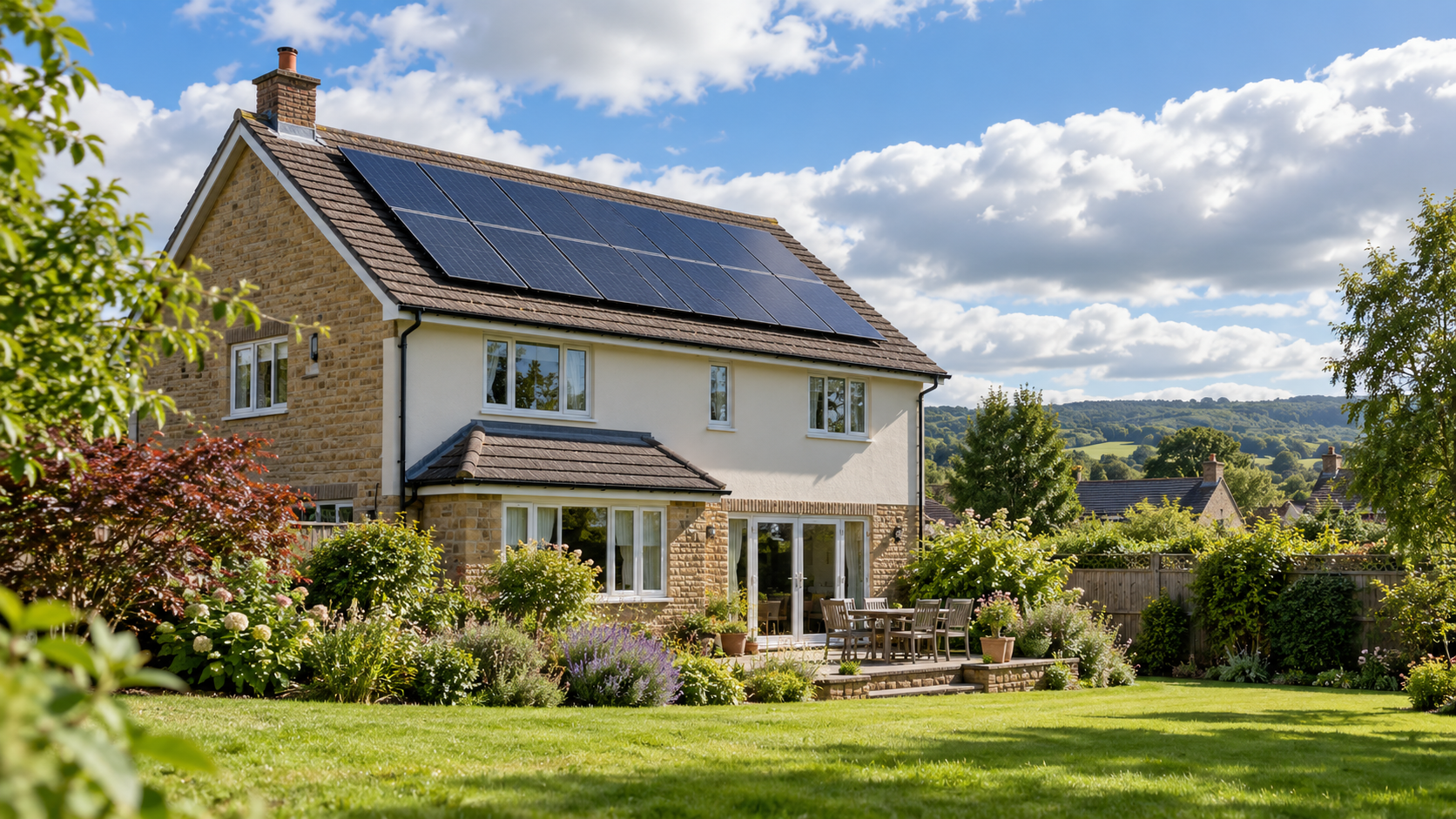
Solar energy can reduce purchased electricity, generate low-carbon power and make useful use of a suitable roof. Its main drawbacks are the initial expense, variable output, site restrictions and the extra equipment needed for storage or backup. The balance depends on your property and when you use electricity.
Solar panels can be a sensible improvement, but a sunny photograph and an attractive savings headline cannot tell you whether they suit your home. A useful decision starts with three questions: what will the system produce, how much can you use, and what will the complete installation cost?
This guide focuses on solar photovoltaic panels, or PV, for homes and small businesses. Solar water heating and passive solar design are different applications with different benefits. Here is how to weigh up solar electricity without expecting it to solve every energy problem.
How solar energy becomes useful electricity
PV cells convert sunlight into direct-current electricity. An inverter converts that electricity into alternating current for ordinary household circuits. Panels, mounting, wiring, protection and controls together form the working system; the panels alone are only part of the purchase. The US Department of Energy explains the underlying technology.
Two units matter. Kilowatts (kW) describe power at a moment in time; kilowatt-hours (kWh) describe energy over a period. A 4 kWp array has a rated peak capacity under standard test conditions. It does not supply 4 kW continuously or guarantee a particular daily energy total.
Solar energy advantages and disadvantages at a glance
| Potential advantage | Limitation to consider |
|---|---|
| Less electricity bought from your supplier | Savings depend on when generation and demand overlap |
| Renewable electricity without burning fuel on site | Manufacturing and disposal still have environmental impacts |
| Useful generation from existing roof space | Shade, roof condition and mounting can restrict the project |
| Possible payment for exported electricity | Eligibility, rates and contract terms need checking |
| Storage can move daytime energy into the evening | Batteries add cost, losses and replacement considerations |
| Potential support for essential backup loads | Only a suitably designed system provides outage protection |
The advantages of solar energy
1. You can buy less electricity
When solar generation supplies an appliance, that portion of its demand no longer needs to come from the grid. This can be particularly useful for a home office or a business with regular daytime activity. The benefit is tied to useful consumption, rather than the number of panels visible on the roof.
Start by listing equipment that already runs during daylight. Could an existing task move to a brighter part of the day without inconvenience or waste? Making good use of generation means shifting necessary consumption, not running extra appliances simply because the electricity feels free.
2. Sunlight is renewable and needs no fuel delivery
PV panels generate electricity without combustion at the point of use. Research summarised by the Department of Energy’s solar environmental report finds much lower lifecycle greenhouse-gas emissions than coal generation, even after manufacturing and other lifecycle stages are counted.
That does not make a panel impact-free. It means the comparison should cover the energy system’s whole life. A well-sited installation that keeps producing useful electricity is a more meaningful environmental goal than simply buying equipment with a green label.
3. Existing roofs can become productive space
A suitable roof can host generation without taking over your garden. However, usable area, orientation, shading and roof strength all matter. Energy Saving Trust recommends assessing these practical constraints before choosing equipment.
For an outbuilding, read our guide to solar panels on a lightweight shed roof. Use it to prepare questions, rather than assuming a small panel automatically means a structurally simple installation.
4. Surplus electricity may have value
In Great Britain, eligible small-scale generators can receive payments through the Smart Export Guarantee. Ofgem explains that suppliers set their own rates and terms, with payments based on metered exports. Northern Ireland has different arrangements.
Do not assume that exported electricity earns the same price you pay for imported electricity. Compare both sides of the tariff and confirm the metering and certification requirements before including export income in your plans.
Exploring energy ideas? You can view the separate energy-information offer (affiliate link). We have not tested the product or verified its claims. It is not a solar installation quote.
5. Storage can improve the timing of supply
A battery can store daytime surplus for later use. The Department of Energy’s storage overview explains how storage helps manage the mismatch between solar production and demand.
Think of storage as a timing tool. It does not create energy, and some energy is lost during charging and discharge. Its usefulness depends on having energy to store and a worthwhile use for it later.
The disadvantages of solar energy
1. The full cost arrives before the benefits
Ask for an itemised quotation covering access, mounting, electrical work, commissioning and any necessary roof repairs. Keep optional storage and backup equipment separate so you can see what each addition changes.
Compare like-for-like proposals. If one quote is cheaper, ask whether it assumes a different array size, excludes work or uses different warranties. A price comparison is only useful when you understand exactly what will be delivered.
2. Output changes with daylight and weather
Panels can generate under cloud, but output is reduced; they do not generate solar electricity at night. In the UK, short winter days create a seasonal mismatch with many households’ energy needs.
The European Commission’s PVGIS tool provides location-based solar-performance estimates. Ask for monthly figures, with orientation and loss assumptions stated, rather than relying on an annual headline. Modelled averages are useful planning evidence, not promises about next Tuesday’s weather.
Off-grid readers also need to consider consecutive poor days. Our three-cloudy-days reserve guide helps organise that question around essential loads.
3. Shade and roof constraints can undermine the plan
Trees, chimneys and neighbouring buildings may shade an otherwise promising roof. East- and west-facing surfaces can still be useful, but the production pattern differs from a south-facing array. A roof that needs major repairs deserves attention before equipment is installed.
Record shadows from safe ground at different times. Our shade-mapping article explains how to organise observations. Ask an installer which shading effects are included in the proposed yield estimate.
4. A battery is another purchase to assess
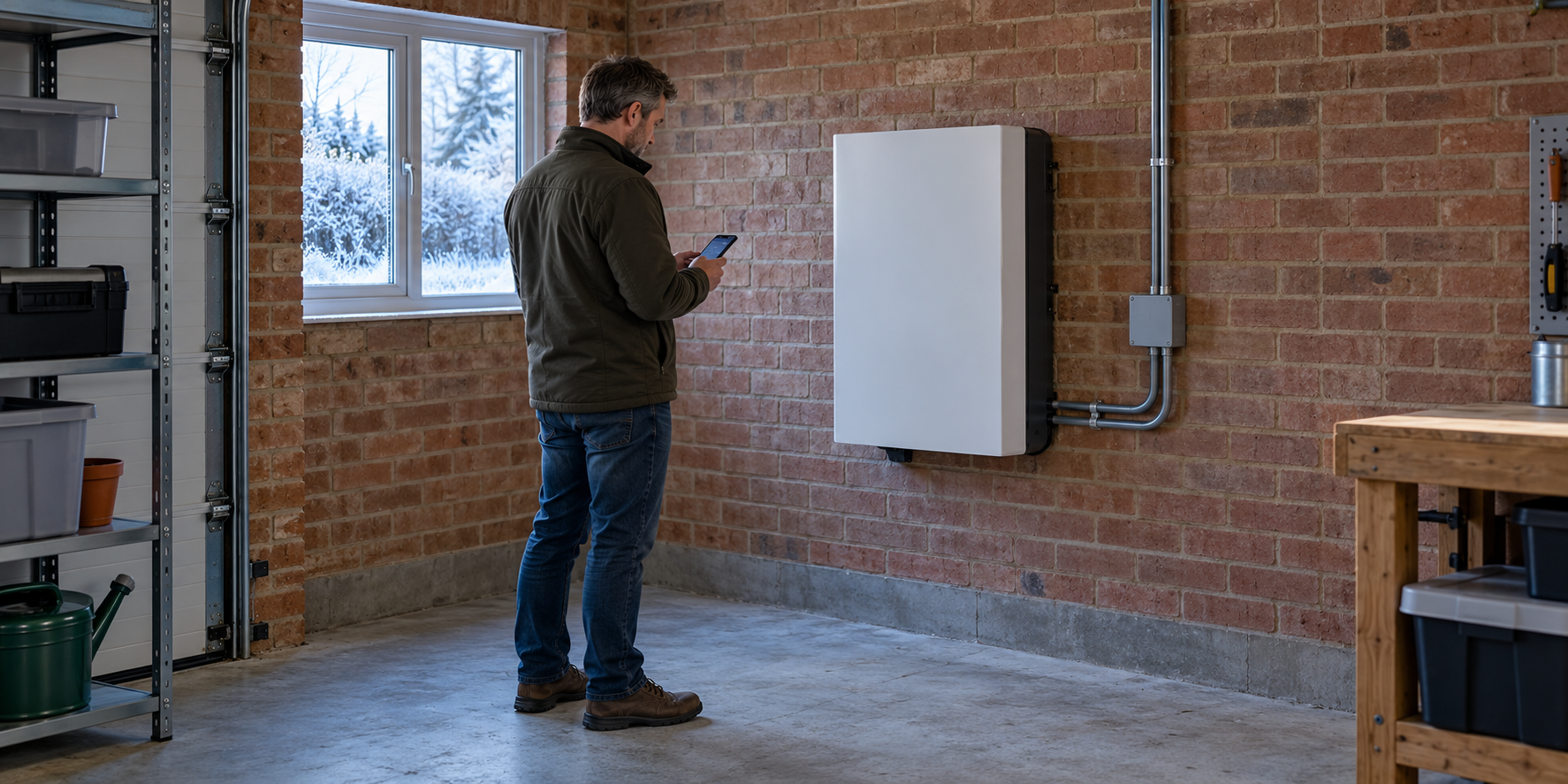
Storage brings additional space requirements, controls and eventual replacement considerations. Compare usable capacity, output power, warranty conditions and the proposed location. A large capacity figure does not necessarily mean the battery can run every appliance simultaneously.
Energy Saving Trust’s battery guide covers sizing and installation. For cold locations, also see our cold-weather charging checks; follow the limits for the actual battery model.
5. Solar does not automatically keep the lights on
A standard grid-connected installation generally stops supplying the home during a grid outage. Even a battery system needs the appropriate backup design and electrical arrangements to operate safely when isolated from the grid.
Ask explicitly: which circuits will work, what is the maximum backup power, and can the panels recharge the battery during an outage? Get the answers in the specification. “Battery included” is not a complete answer to a backup requirement.
6. Maintenance and end-of-life arrangements matter
PV generally needs relatively little routine maintenance, but faults, dirt and component ageing still need attention. Ask for monitoring instructions and a maintenance plan, including how inverter replacement would be handled. Leave roof access and electrical work to suitable professionals.
The Department of Energy’s end-of-life guidance highlights repair, reuse and recycling. Ask who will remove and handle equipment when it eventually needs replacing; those responsibilities belong in a long-term plan.
A simple way to compare the potential savings
Illustrative example — not a tariff quote or forecast
Suppose an array produces 3,000 kWh in a year. You use 1,200 kWh directly and export 1,800 kWh. Assume imported electricity costs 25p/kWh and export earns 10p/kWh.
- Avoided imports: 1,200 × £0.25 = £300.
- Export income: 1,800 × £0.10 = £180.
- Combined annual benefit: £480 before other costs.
With a hypothetical £6,000 installation, simple payback would be £6,000 ÷ £480 = 12.5 years. This ignores finance, maintenance, degradation, replacements and changing tariffs.
Now change one assumption at a time. What if you export more because nobody is home? What if the quote includes roof repairs? Request a separate battery comparison using its additional cost and additional benefit, allowing for losses and export income you would give up.
If you want to examine the seller’s energy-information product, the affiliate offer is available here. Check its contents and terms yourself; no savings in this example are attributed to that product.
Is solar energy right for you?
Make a short decision sheet: your purpose, twelve months of electricity use, daytime demand, roof observations and complete quotations. Ask each installer to explain the same assumptions. Confirm site-specific permissions, network requirements, warranties and aftercare before committing.
Solar is most useful when the resource, equipment and consumption fit together. If a proposal only makes sense with optimistic assumptions, ask for a more conservative comparison. The aim is a system that serves your needs across ordinary days as well as sunny ones.
Frequently asked questions
What is solar energy’s biggest advantage?
For many households, it is generating electricity locally that reduces grid purchases. The size of that benefit depends on how much useful generation coincides with demand.
What is its biggest disadvantage?
There is no universal answer. Upfront cost may dominate one project, while heavy shading or weak winter output may be the decisive issue for another.
Do I need a battery?
No. A grid-connected solar installation can operate without one. Assess storage as a separate investment based on your consumption, tariffs and objectives.
Can solar cover all my electricity needs?
Matching annual generation to annual consumption does not guarantee supply at every moment. Nights, winter shortfalls and appliance power peaks require separate consideration.
Is solar electricity completely free?
Sunlight has no purchase price, but the equipment, installation and upkeep cost money. Include those costs when comparing options and ignore promises of unlimited electricity.
Explore the equipment: What are solar panels made of? explains the materials, layers and recycling considerations.
Sources and further reading
Sources checked 6 October 2026. The savings example uses invented assumptions for explanation.
- Energy Saving Trust: Solar panels
- Energy Saving Trust: Battery storage
- Ofgem: Smart Export Guarantee
- Department of Energy: How solar works
- Department of Energy: Solar and storage basics
- European Commission: PVGIS
- Department of Energy: Solar environmental report (2017)
- Department of Energy: PV end-of-life management
Explore the separate energy-information offer
Review the seller’s contents, price and terms before purchasing. This optional digital product is not a solar installation, professional assessment or guarantee of savings.
View the energy offer — affiliate link